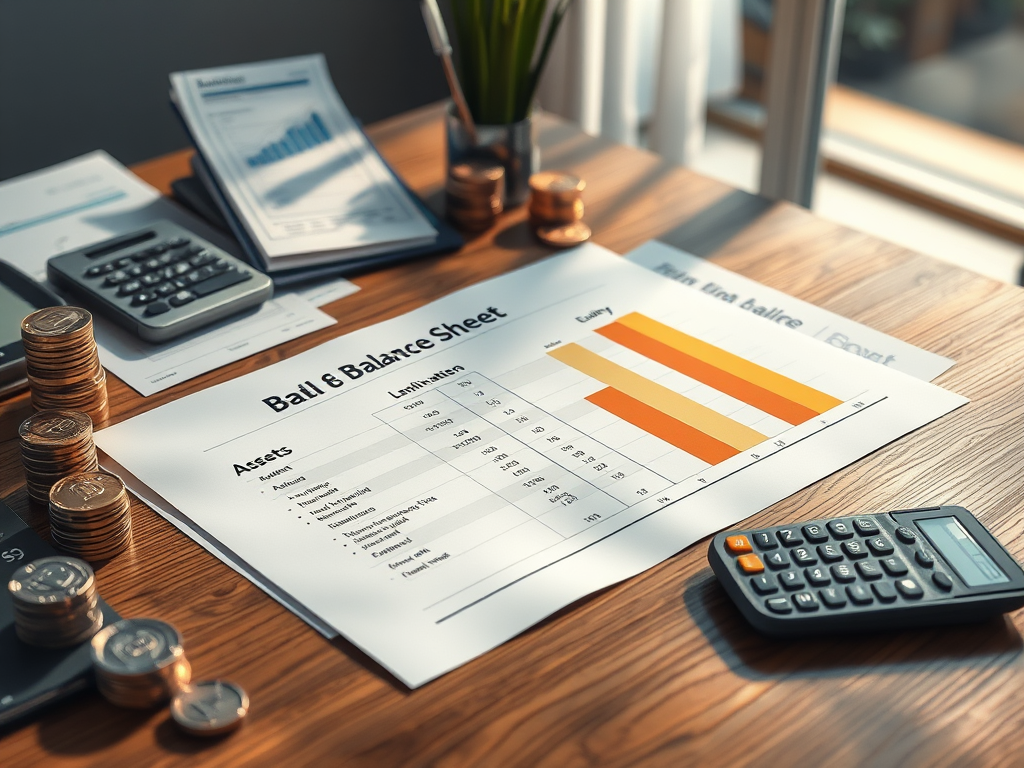
The balance sheet is a snapshot of your business’s financial position at a specific point in time. It reveals what your company owns (assets), what it owes (liabilities), and the owner’s stake in the business (equity). Understanding the balance sheet is crucial for assessing your company’s financial health.
How to Read and Interpret a Balance Sheet:
The balance sheet is organized into two main sections: assets on one side and liabilities and equity on the other. Assets are listed in order of liquidity (how easily they can be converted to cash), while liabilities are listed in order of how soon they are due.
Key figures to look for include total assets, total liabilities, and total equity. You can also calculate important ratios like the current ratio (current assets / current liabilities) to assess your company’s ability to meet short-term obligations.
Key Insights from the Balance Sheet:
- Liquidity: Can your business meet its short-term obligations?
- Solvency: Can your business meet its long-term obligations?
- Financial Health: Overall picture of your company’s financial strength.
What is a Balance Sheet?
The balance sheet follows the basic accounting equation: Assets = Liabilities + Equity.
- Assets: What your business owns (cash, accounts receivable, inventory, equipment, etc.)
- Liabilities: What your business owes (accounts payable, loans, etc.)
- Equity: The owner’s stake in the business (retained earnings, owner’s investment)
(Example balance sheet and walk-through would be included here)
Keywords: Balance sheet, financial statements, assets, liabilities, equity, financial analysis, business financials, financial reporting, accounting, financial health
Leave a Reply